


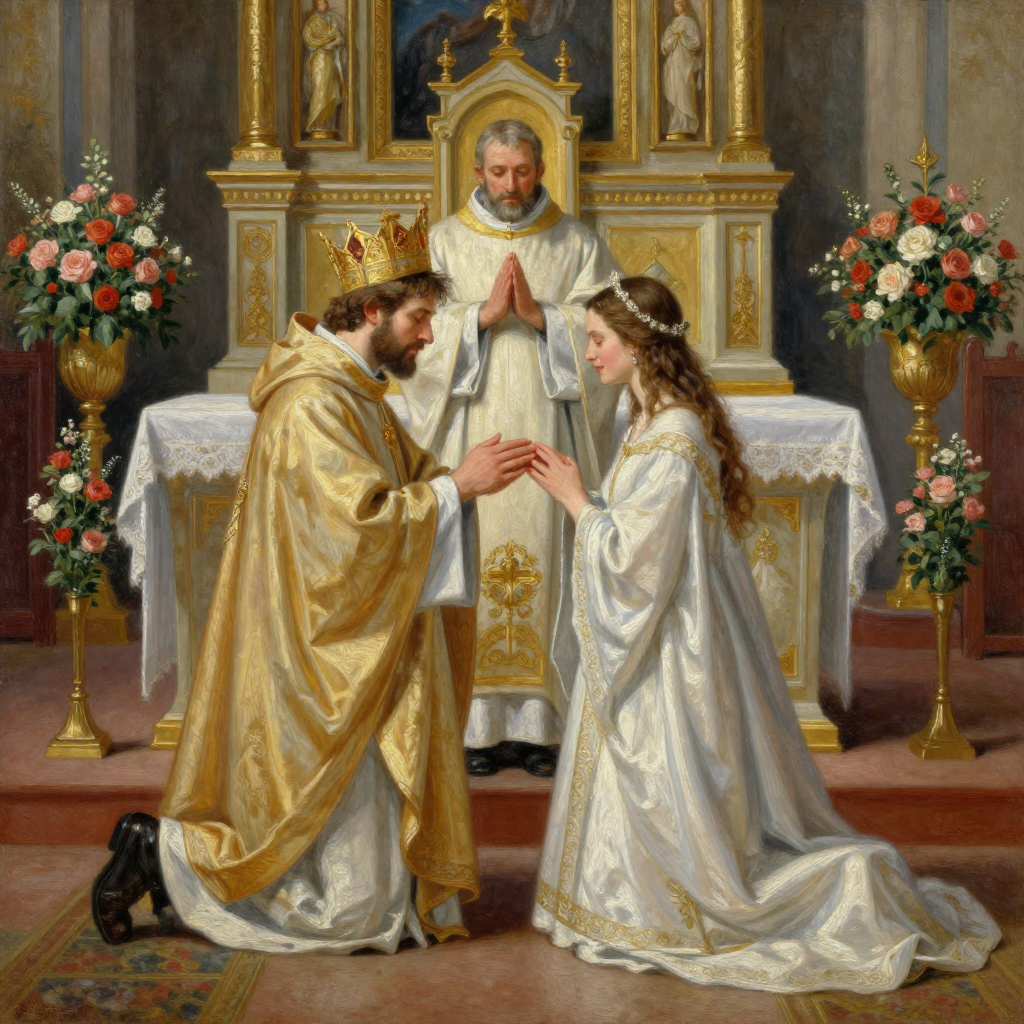
Religion should be the compass of truth, yet in the matter of Christian weddings, the compass spins without direction. I find it deeply hypocritical, not just in one church, but across Christianity as a whole on how the institution of holy matrimony has been reduced to a performance, a show of white garments over stained realities.
Churches preach purity, holiness, and abstinence, yet they welcome couples to the altar who have long crossed those moral boundaries, as long as the woman is not pregnant.
Is the womb now the measure of holiness?
Is pregnancy the only evidence of impurity?
Or is the church simply comfortable blessing sin as long as it remains invisible?
The Christian ideal is clear: sex before marriage is a sin. But the modern practice is an entirely different story.
Pastors know the truth. Parents know the truth. The couple knows the truth. Yet the church ceremony proceeds as though nothing ever happened.
The ceremony becomes a form of spiritual theatre, where the actors dress in white while everyone pretends not to see the grey areas underneath. Instead of confronting the truth, the church allows grace to cover what convenience prefers to hide. It is not holiness, it is performance.
But the hypocrisy does not end with the church. Our parents, too, are participants in this drama. Many insist on elaborate white weddings not out of spiritual conviction, but for prestige, the social respect that comes from hosting a grand, church-approved ceremony. A white wedding becomes a badge of honour, proof that “we raised our children well.”
Parents want the admiration, the praise, the societal nod of approval. The day becomes more about their reputation than the couple’s spiritual condition.
And then there is the unspoken truth:
Many parents insist on a big church wedding because wedding ceremonies operate as a cycle of social repayment.
They want to receive the same gifts, money, and honour that they once gave others at their own events.
It becomes an economic exchange, not a moral institution.
Holiness?
That one is secondary.
In many Nigerian and African communities, a belief still persists:
If your wedding does not involve a church ceremony, then the bride must be pregnant.
No church wedding, equates premarital sex.
Premarital sex , a shame.
Shame, an embarrassment for the parents.
To escape gossip, mockery, and community suspicion, families rush their children to the altar, not out of righteousness, but out of fear of disgrace. The church wedding becomes a shield, a cover-up, a way of preserving family honour rather than confronting moral reality.
In such cases, the white wedding is no longer a sacrament.
It is a facade of respectability.
A person may be the top “OnlyFans subscriber”, living a life filled with moral contradictions, but as long as there is no fetus forming in the womb, the church will still say, “Come to the altar.”
But let the woman be pregnant before the wedding, and suddenly her body is “unclean,” suddenly the church becomes strict, suddenly the altar becomes sensitive.
So what exactly is the church protecting?
Holiness?
Or image?
Is it the act of sex that is sinful, or the evidence of it?
This selective morality exposes the double standards embedded in the system.
In the traditions of our ancestors, marriage carried a sacred weight. A bride was expected to marry with her “flower intact,” not because of oppression, but because purity was tied to spiritual safety and communal honour. Those who violated this norm often faced consequences such as stillbirth, barrenness, hardship, according to belief.
Whether or not those consequences were real, the psychological weight created a mindset of accountability.
But today, churches have abandoned accountability for convenience. They choose silence over truth.
What exactly is the biblical foundation for the white wedding ceremony?
Christ never mandated it.
The apostles never prescribed it.
It is a cultural adaptation, not a spiritual command.
If this ceremony is not even scriptural, then why has it become the ultimate measure of moral approval?
In Islam, Nikkah is straightforward, honest, and spiritually grounded. Yet churches refuse to host such because they believe their altars are “too holy” while they simultaneously bless couples whose moral lives contradict everything the church claims to stand for.
Holiness has been replaced with hypocrisy.
Ceremony has replaced sincerity.
Appearance has replaced truth.
The church should be the custodian of integrity, but too often, it has become the manager of image. And until we confront these hypocrisies, the institution of Christian marriage will continue to decay under the weight of its own pretence.
The question remains:
Why do we measure holiness by the absence of pregnancy instead of the presence of truth?